Commercial Drain Servicing
Scheduled drain servicing for commercial properties — preventing blockages, ensuring compliance, and protecting your site from costly emergency repairs.
Planned Drain Servicing That Prevents Costly Emergencies
Most drainage callouts occur only after a problem has become impossible to ignore.
Most planned preventative maintenance (PPM) schedules in facilities management include drainage inspections every 6–12 months, depending on site usage, risk and previous issues.
PPM isn’t based on time alone; it’s based on risk, usage and the cost of disruption.
Book a Drain SurveyOur Drain Servicing Includes
CCTV Drain Survey
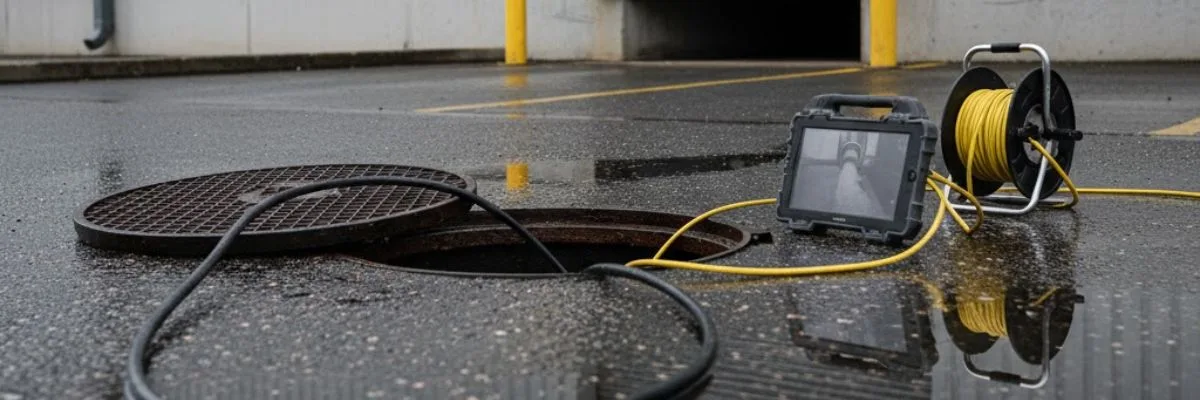
Camera inspections to identify blockages, cracks, and structural defects before they escalate.
High-Pressure Jetting
Powerful water jetting to clear grease, debris, and build-up from commercial drainage systems.
Gully and Interceptor Cleaning
Routine emptying and cleaning of gullies and interceptors to maintain flow and compliance.
PPM Scheduling
Structured planned preventative maintenance programmes tailored to your site's usage and risk.
Post-Service Reporting
Detailed reports after every visit, with recommendations for any follow-up work identified.
Frequently Asked Questions
How Often Should Commercial Drains Be Serviced?
Most commercial properties benefit from drainage servicing every 6–12 months. Higher-risk environments such as kitchens or food handling sites may need servicing every 3–6 months.
What's Included in a Commercial Drain Servicing Visit?
A typical visit includes CCTV inspection, high-pressure jetting, gully and interceptor cleaning, and a written report with any recommendations.
Do I Need a PPM Contract or Can I Book One-Off Visits?
Both options are available. We recommend a PPM contract for most commercial sites as it reduces reactive costs and keeps your drainage compliant year-round.
What's the Difference Between Reactive Drain Clearing and Planned Maintenance?
Reactive clearing fixes the immediate blockage. Planned maintenance identifies and prevents the underlying causes — saving time, money, and disruption in the long run.
Can Drain Servicing Help Reduce My Insurance Premiums?
Maintaining records of planned drainage maintenance can support insurance compliance and in some cases reduce your risk profile with insurers.
How Do I Know if My Site Needs More Frequent Maintenance?
Repeated blockages, foul odours, slow-draining floor sinks, or standing water near entrances are all signs that your current schedule isn't frequent enough.
What Happens During a CCTV Drain Survey?
A camera is inserted into the drain to inspect the internal condition of pipework. We identify blockages, root ingress, cracks, or misaligned joints and provide a report with findings.
Can You Service Drains on Multiple Sites Under One Contract?
Yes. We manage PPM schedules across multiple sites for facilities managers and property portfolios, with centralised reporting and a single point of contact.
Client Testimonials
“Most blockages show early warning signs. Acting quickly avoids disruption, downtime and expensive reactive callouts.”“David Brayfield”
“From the first visit, BAES took ownership of the issue. They kept us updated at every step, explained the options, and resolved the problem without disrupting our tenants. Their engineers treat our site like it’s the only one that matters.”“Stephen Collins, Property Manager, Reigate”
Not Sure What You Need? Get a Free Expert Assessment, Call 01903 650120
Book a Free Property Appraisal