Why Commercial Drain Problems Rarely “Come Out of Nowhere”
Commercial drainage systems work hard. Far harder than their domestic counterparts. They’re designed to cope with higher volumes, varied waste streams, and constant use, but that doesn’t make them immune to gradual failure.
Grease, food waste, debris, surface water, and inappropriate discharge all place sustained pressure on pipework. UK water industry guidance repeatedly identifies fats, oils and grease (FOG) as one of the most common causes of non-domestic blockages, particularly in commercial kitchens and high-use environments.
As these materials build up, flow becomes restricted. Waste gets trapped. Odours develop. And during heavy rainfall or cold weather, that reduced capacity is often exposed, sometimes suddenly, sometimes catastrophically.
Why Commercial Drainage Issues Are More Serious Than Domestic Problems
Commercial drainage systems tend to be larger, interconnected, and partially hidden beneath buildings, car parks, or service yards. That means problems often develop out of sight and affect multiple areas at once before anyone realises there’s an issue.
There’s also the question of responsibility. Under UK water regulations, property owners or occupiers are responsible for maintaining drainage assets within their boundary, right up to the point where they connect to the public sewer.
In practical terms, that means that if a private drain collapses, blocks, or causes pollution due to poor maintenance, liability lies with the business, not the water company. It’s a detail that’s often overlooked until something goes wrong.
“Most commercial drainage failures don’t come out of nowhere. There are usually warning signs long before disruption occurs — the challenge is recognising them early and acting before they become costly.”
Seven Early Warning Signs of Commercial Drain Failure
Spotting issues early gives you the opportunity to address them in a controlled, planned way rather than in an emergency. The most common issues include:
Slow drainage across multiple areas
If sinks, toilets, or floor drains are slow in more than one location, this usually points to a developing restriction within the system rather than a localised blockage.
Repeated blockages in the same place
When the same drain keeps causing trouble, there’s almost always an underlying reason — grease build-up, damaged pipework, or poor design. Clearing the symptom without addressing the cause often leads to repeat callouts.
Persistent foul odours
Ongoing smells inside buildings or around external drains are commonly caused by trapped waste, grease deposits, or standing water. They often worsen in warmer weather and signal restricted flow.
Gurgling noises from pipework
Bubbling or gurgling sounds are caused by air displacement within partially blocked pipes. They’re easy to ignore — but they’re often one of the earliest audible warning signs.
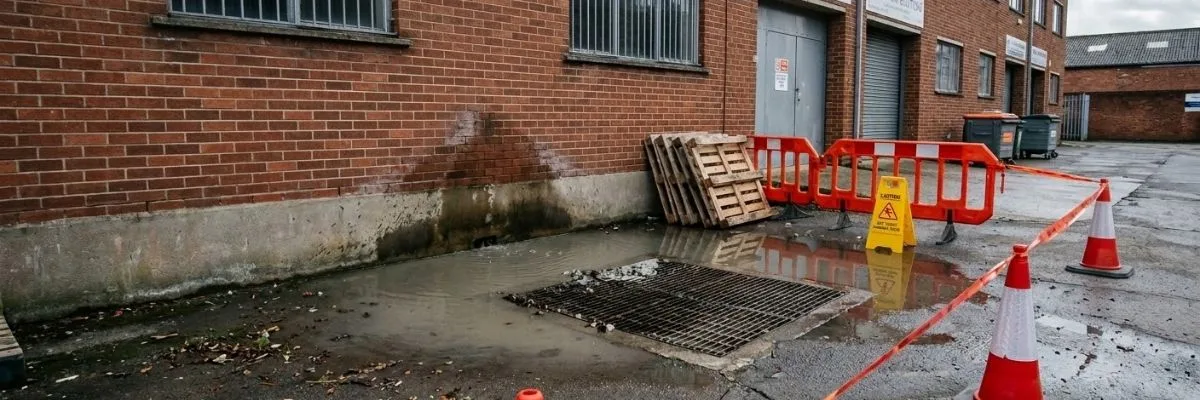
Standing water around external drains
Pooling water near inspection chambers or gullies suggests surface water isn’t dispersing as it should. Aside from increasing slip risk, it accelerates wear on surrounding surfaces.
Increased pest activity
Slow-moving or stagnant drains create ideal conditions for rodents and insects. Once pests become established, the issue can escalate quickly into a wider hygiene and compliance concern.
Rising reactive maintenance costs
Frequent drainage callouts are rarely a coincidence. They usually indicate a lack of planned servicing, with reactive fixes becoming more expensive and more disruptive over time.
What Early Action Delivers
Addressing drainage problems at the warning-sign stage typically leads to:
-
Fewer emergency callouts
-
Lower repair and reinstatement costs
-
Reduced operational disruption
-
Stronger compliance confidence
-
Better visibility of overall site condition
For commercial properties, early intervention isn’t just about fixing faults. It’s about staying in control.
"Drainage issues rarely announce themselves loudly. By the time there's a visible problem, the damage is usually already done. Regular inspection is the only reliable way to stay ahead of it."
Concerned About Your Commercial Drainage?
Book a drainage inspection with our expert team — quick, thorough, and no obligation.
The Cost of Ignoring Early Drainage Warning Signs
Drainage issues don’t resolve themselves. Left unchecked, they tend to escalate into flooding, structural damage, business interruption, or health and safety incidents.
Industry guidance consistently highlights that unresolved commercial drainage problems can damage building fabric and disrupt operations. Standing water also creates a breeding ground for pests and bacteria — something no business wants to explain during an inspection.
Insurance is another consideration. Many commercial property insurers expect evidence of routine maintenance when assessing drainage-related claims. Where neglect is identified, claims may be delayed, reduced, or declined altogether.
When a Drainage Issue Becomes Urgent
Some situations call for immediate professional intervention. These include:
-
Internal water is backing up into occupied areas
-
Flooding during or after rainfall
-
Drain odours affecting welfare facilities
-
Overflowing external chambers or gullies
At this point, delays increase both costs and risks, particularly when staff safety, operations, or neighbouring properties are affected.
Preventing Problems Through Planned Drain Servicing
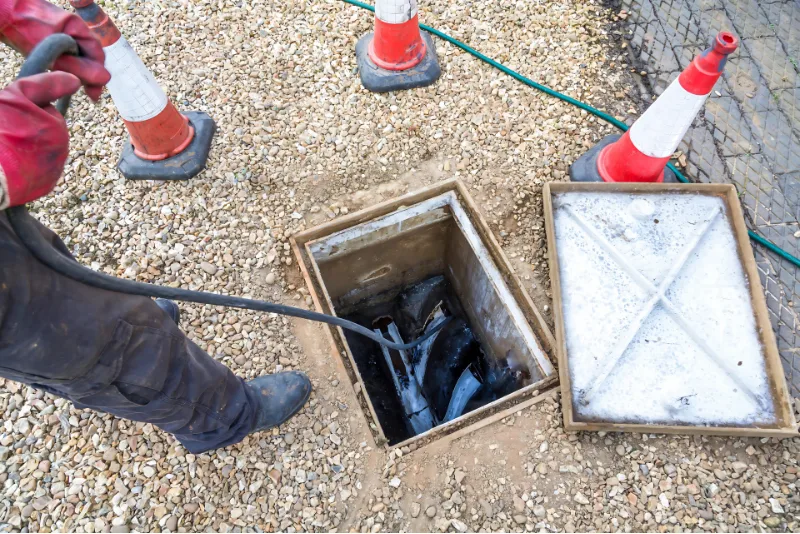
Planned drain servicing remains one of the most effective ways to prevent repeat failures. The right inspection and cleaning frequency depends on the site type, usage levels, and waste profile, but regular checks help identify issues before they become disruptive.
Facilities management best practice consistently favours planned preventative maintenance over reactive repair. The result is predictable costs, fewer unplanned failures, and a lower overall risk profile across the site.
Compliance and Legal Responsibilities
Commercial drainage responsibilities are underpinned by UK legislation, including the Environmental Protection Act 1990 and the Water Industry Act 1991. These frameworks place a clear duty on businesses to prevent harmful discharge, blockages, and pollution incidents.
UK government pollution-prevention guidance makes it equally clear: businesses must not allow contaminated water to enter drains. Serious breaches can result in enforcement action, unlimited fines, or, in extreme cases, prosecution.
In short, poor drainage maintenance isn’t just an operational issue; it’s a legal, financial, and reputational one.
How BAES Supports Commercial Drainage Management
We work with commercial property owners, facilities managers, and landlords to take a proactive approach to drainage management. That means identifying risks early, not waiting until an emergency occurs.
Our support includes:
-
Identifying early warning signs before failure occurs
-
Providing documentation to support compliance and insurance requirements
-
Reducing reliance on emergency callouts
-
Supporting both occupied and vacant sites
The outcome is fewer surprises, clearer records, and confidence that drainage risks are being actively managed.
If you’ve noticed early warning signs or you simply want to reduce the risk of future drainage failures, speaking to an experienced team sooner rather than later can prevent unnecessary disruption.
Request a call back to discuss your site and the most appropriate next steps. There’s no obligation, just practical advice when it’s needed.
For immediate help, call 01903 650120.
Industry & Regulatory Sources
Water UK – Fat, Oil and Grease (FOG) Guidance Water UK identifies fats, oils and grease (FOG), food waste and debris as leading causes of blockages in non-domestic drainage systems, particularly in commercial kitchens and high-use environments. Source: Water.org
Ofwat – Responsibility for Drainage Assets Ofwat guidance confirms that property owners or occupiers are responsible for drainage systems within their boundary, up to the point of connection with the public sewer. Source: Ofwat.gov.uk
UK Government – Pollution Prevention Guidance for Businesses GOV.UK pollution prevention guidance sets out a legal duty for businesses to prevent harmful substances from entering drains and watercourses. Serious breaches may result in enforcement action, unlimited fines, or prosecution. Source: Gov.uk
Environmental Protection Act 1990 & Water Industry Act 1991 UK legislation places duties on businesses to prevent pollution, manage waste responsibly, and maintain drainage systems to avoid environmental harm. Sources: